
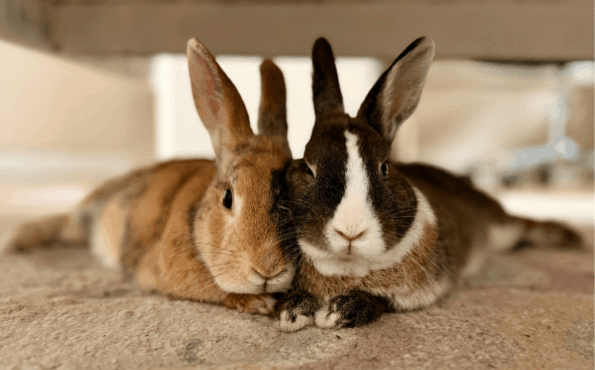
Every year on the fourth Saturday of September, animal lovers across the globe come together to celebrate International Rabbit Day. This year, on Saturday 26th of September, we are teaming up with our friends at Bristol A.R.C. to shine a well-deserved spotlight on these incredible, complex, and joyful animals.
Rabbits are currently one of the most popular pets in the UK, yet they remain one of the most misunderstood. To help give bunnies the life they truly deserve, let’s explore some surprising rabbit facts, break down modern housing standards, and look at how specialist rabbit insurance can protect your long-eared companions!
Jump to:
- 7 Mind-blowing facts about rabbits
- Rethinking the traditional hutch
- Why specialist rabbit insurance matters
- Doing better together
7 Mind-blowing facts about rabbits
Think you know everything about bunnies? Test your knowledge against these fascinating facts provided by the team at Bristol A.R.C.:
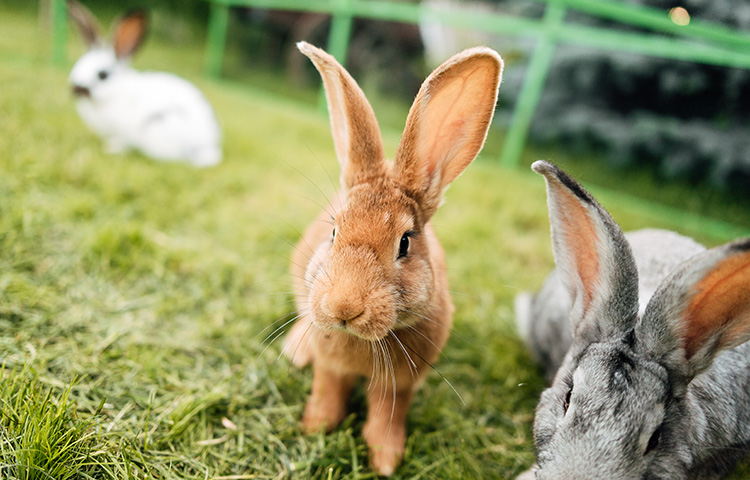
- Rabbits are NOT rodents: Despite popular belief, rabbits aren’t part of the rodent family. They are actually lagomorphs, a distinct group of mammals that also includes hares and pikas.
- They perform a “binky” when overjoyed: One of the purest sights in the pet world is a rabbit doing a binky! When a rabbit feels completely happy and excited, it leaps into the air and twists its body in a sudden burst of pure joy.
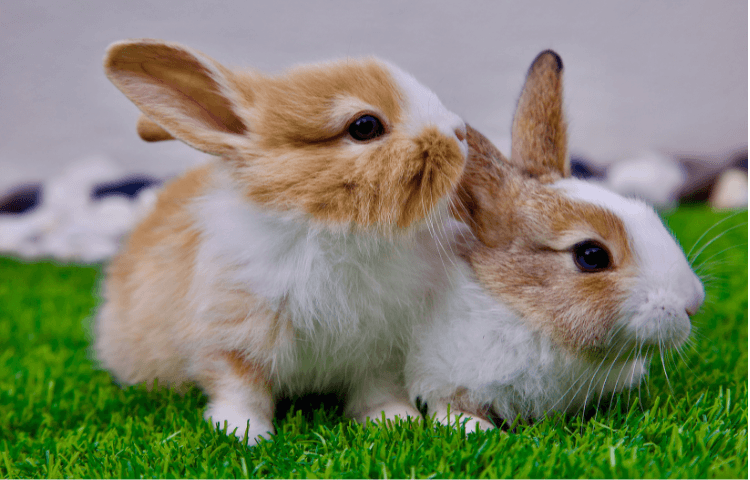
- They are deeply social: Rabbits should never live alone. They are naturally social creatures and are infinitely happier with a compatible bunny companion. If you’re thinking about adopting, always plan to bring home a bonded pair!
- Their ears regulate body temperature: A rabbit’s iconic ears do far more than just listen; they play a critical role in controlling their internal body temperature.
- Their teeth never stop growing: A rabbit’s teeth grow continuously throughout its entire life. Constant chewing on fresh hay is essential to wear them down and prevent painful dental issues.
- They have 360-degree vision (with one small exception): Rabbits can see almost entirely around their bodies to spot potential danger, but they actually have a tiny blind spot directly in front of their nose!
- They are built for speed: When a rabbit gets going, it can reach impressive speeds of around 35 miles per hour!
Rethinking the traditional hutch
As our understanding of animal welfare grows, how we care for our pet companions must evolve too. Bristol A.R.C. highlights a major misconception that still persists among pet owners: “My rabbit always lived in a hutch and was happy.”
Where did the hutch come from?
Traditional wooden hutches were originally designed over 1,500 years ago, not as cosy, loving homes, but as an efficient way to farm rabbits for meat. They were built purely for functional containment, not for animal welfare or comfort. Today, rabbits are cherished family members, and their living conditions should reflect that.
Why confinement harms rabbits
Rabbits are energetic, curious, and athletic animals that need room to run, hop, stretch, explore, and do those famous binkies. Confining a rabbit to a small hutch prevents them from expressing these natural behaviours.
Over time, living in a cramped space can cause:
- Physical health issues: Including obesity, joint problems, and pododermatitis (bumblefoot).
- Mental distress: Leading to severe boredom, lethargy, and stress.
- Hygiene risks: Small spaces make it much harder for rabbits to stay clean, significantly increasing the risk of deadly conditions like flystrike or respiratory issues.
What does good rabbit housing look like today?
Whether your bunnies live inside with you or outside in the garden, space is non-negotiable. A pair of rabbits needs a minimum, uninterrupted floor space of 10ft by 6ft (3m by 2m).
Indoor
- The space: A dedicated spare room, a conservatory, or an exercise pen in a secure section of a living room works brilliantly. Large dog crates attached securely to a permanent exercise run are also a great option, provided the total area meets the minimum floor space.
- The essentials: Ensure the area includes multiple hiding places, comfortable sleeping spots, litter trays, fresh water and hay stations, and plenty of enrichment toys.
- Safety first: Rabbit-proof the area by securing electrical cables, removing toxic houseplants, and eliminating potential escape routes.
Outdoor
- The setup: A hutch should only serve as a small sleeping or hiding quarters attached directly to a large, secure run that the rabbits can freely access 24/7. Alternatively, converted garden sheds or Wendy houses make fantastic winter-proof setups.
- Predator & escape proofing: Ensure the entire boundary has secure fencing, covered tops to protect against birds of prey, and solid foundations (or buried mesh) to prevent foxes from digging in or rabbits from digging out.
- Weather protection: Provide plenty of shelter options to protect them from wind, rain, and direct heat.
Why specialist rabbit insurance matters
Giving your rabbits ample space to exercise, dig, and play keeps them mentally fulfilled, but even the happiest, healthiest bunnies can run into sudden health problems.
Because rabbits are classified as exotic pets, veterinary treatment often requires specialist care. Common issues like GI stasis (a digestive condition where the gut slows down), dental spur trimmings, or unexpected injuries require prompt attention from an exotic vet.
Why choose ExoticDirect for your rabbit insurance?
Having dedicated rabbit insurance ensures you can focus entirely on getting your bonded pair back on their feet without worrying about unexpected financial costs:
- Tailored vet fee cover: Choose between Essential or Premier policies offering up to £2,000 in vet fee cover.
- Multi-pet coverage: Cover up to three rabbits on a single policy, perfect for keeping bonded pairs protected together.
- Direct vet payments: We can pay your vet directly, making emergency visits as smooth and stress-free as possible.
- 25+ years of exotic expertise: As specialist exotic pet insurers since 1996, our UK-based team understands the distinct healthcare needs of lagomorphs.
Doing better together
Upgrading your rabbit’s living space and healthcare isn’t about feeling guilty over how things were done in the past; it’s about embracing better care today. By giving our bunnies more room to roam, mentally stimulating environments, and the protection of specialist insurance, we get to see their true, vibrant personalities shine!