
Jump to:
- Your tortoise’s diet in the wild
- Tortoise food list
- What fruit can tortoises eat?
- Your tortoise and strawberries
- Tortoises and sweetcorn or maize
- Grow your own tortoise food
- How much sh ould I feed my tortoise?
Your tortoise’s diet in the wild
In practical terms, tortoises can be divided into two broad groups based on their natural habitat and diet. Understanding which group your tortoise belongs to can help you choose the right foods and provide a balanced diet.
These tortoises feed mainly on leaves and stems:
- Hermann’s tortoise (Testudo hermanni)
- Horsfield’s tortoise (Agrionemys horsfieldii)
- African Sulcata
- Leopard tortoise (Stigmochelys [Geochelone] pardalis)
- Indian Star tortoise (Geochelone elegans)
These tortoises are associated with dry, arid areas of the world, where their diet consists largely of suitable leafy plants and other vegetation.
These tortoises have a higher percentage of fruit in their diet:
- Red-Footed tortoise (Chelonoidis [Geochelone] carbonaria)
- Yellow-Footed tortoise
- Elongated tortoise (Indotestudo elongata)
These species tend to come from forested areas, where a wider variety of foods may be available.
It is worth emphasising that pet tortoises generally do not eat grass, although the African Sulcata (Geochelone sulcata) is an exception, being a true grazer. As different species have different nutritional needs, it’s important to identify your tortoise before deciding what to feed it.
Your tortoise’s diet forms an essential part of its overall care. Heating, lighting and UV requirements are also important, as these help support your tortoise’s health and wellbeing. Read more about tortoise heating, lighting and UV requirements.
Tortoise food list
There are many plants that can form part of a tortoise’s diet. Depending on the species, suitable options may include:
- Dandelion (Taraxacum officinale)
- Sow thistle (Sonchus species)
- Chicory (Cichorium intybus)
- Coleus (Solenostemon scutellarioides)
- Shepherd’s purse (Capsella bursa-pastoris)
- Field bindweed (Convolvulus arvensis)
- Hawkbit (Leontodon species)
- Mallow (Malva species)
- Hedge mustard (Sisymbrium officinale)
- Clover (Trifolium species)
- Vetch (Vicia species)
- Plantain (Plantago species)
Many of these plants can be grown from seed, making it easier to provide fresh food at home. Avoid using shop-bought plants such as coleus unless you can confirm they have not been treated with potentially harmful pesticides.
Some vegetables can also be offered, depending on your tortoise’s species. A little grated carrot or an occasional Brussels sprout may be suitable for certain tortoises, but these should not replace the main foods recommended for their particular diet.
Variety is key when feeding tortoises. Offering a suitable range of plants helps provide different nutrients, while calcium and vitamin D3 are important for healthy bones and shell development. Supplement requirements vary, so seek advice from an exotic-animal vet if you’re unsure what your tortoise needs.
Northampton Reptile Centre provides a range of calcium supplements that may help support your tortoise’s diet.
Mediterranean tortoises
A mixed, weed-based diet is generally best for Mediterranean tortoises. However, you need to be able to identify the plants you’re offering and avoid potentially harmful varieties, such as buttercups (Ranunculus repens).
Mediterranean tortoises include:
- Spur-thighed tortoise (Testudo graeca)
- Hermann’s tortoise (Testudo hermanni)
- Marginated tortoise (Testudo marginata)
- Horsfield’s tortoise (Testudo horsfieldii)
Providing a varied selection of suitable weeds and leafy plants can help keep their diet interesting while supporting their nutritional needs.
Other food advice
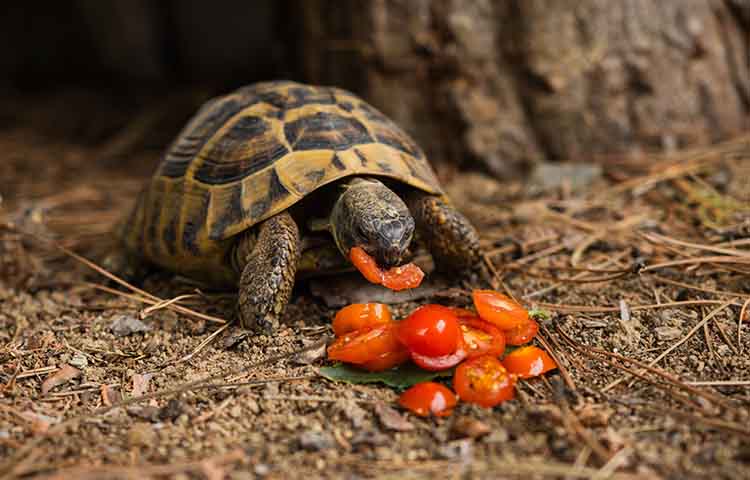
You can buy a number of different vegetables for your tortoise, too. However, it’s best to use food that has been grown without potentially harmful chemicals, especially as tortoises are long-lived animals.
Try to avoid offering only soft leaves. A varied diet with appropriate fibrous plant material is important, and your tortoise’s beak should be monitored for signs of overgrowth.
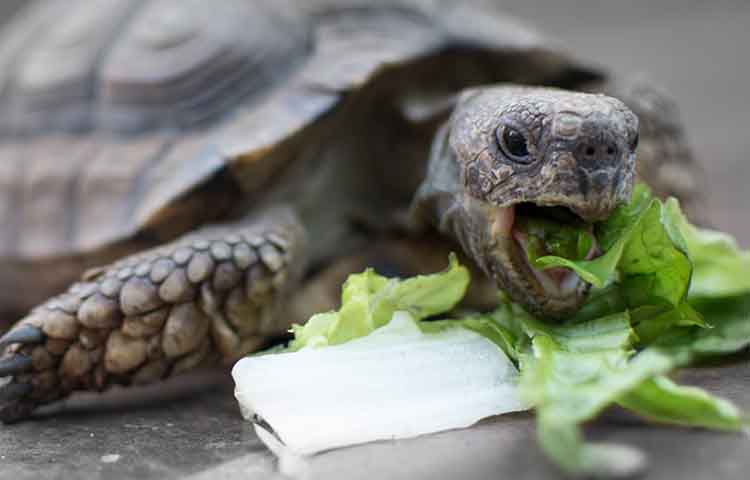
During winter, several types of cabbage may be offered occasionally and in moderation to suitable species. Avoid relying on lettuce, as many varieties have relatively low nutritional value. If you do offer lettuce, choose an appropriate variety and make sure it forms only a small part of a varied diet.
Mushrooms may be eaten by some species, including red-footed tortoises and hingeback tortoises (Kinixys species), which may consume fungi in the wild. However, never assume that an unidentified mushroom is safe to feed.
Fresh food should always be supplied, and any uneaten food should be removed before it spoils and becomes a potential health hazard. You should also provide clean, fresh drinking water in a shallow dish that your tortoise can access safely.
What fruit can tortoises eat?
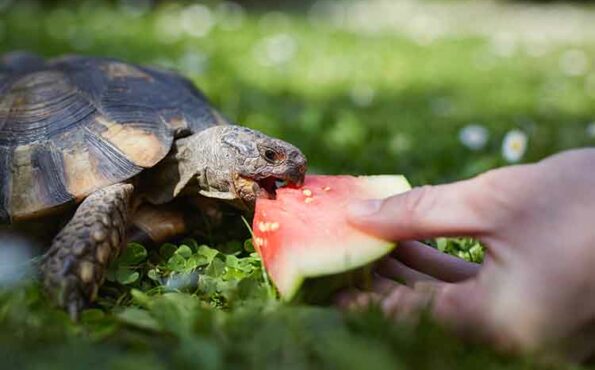
Some tortoises, such as red-footed and yellow-footed tortoises, can eat small amounts of fruit, including melon, berries, grapes and apple. Offer fruit sparingly, as too much can cause digestive upset. Avoid citrus fruits, and don’t routinely feed fruit to Mediterranean tortoises.
Food tortoises can’t eat
Some plants contain substances that may be harmful to tortoises. Never assume your tortoise will avoid poisonous plants, and always check that a plant is safe for its species before feeding it.
The following list includes some plants and foods that require caution, but it is not comprehensive:
- Daffodil (Narcissus pseudonarcissus)
- Azalea (Rhododendron species)
- Foxglove (Digitalis species)
- Avocado (Persea species)
- Buttercup (Ranunculus species)
- Auricula (Primula auricula)
- Bean sprouts
- Citrus fruit (Citrus species)
- Hydrangea (Hydrangea species)
- Iris (Iris species)
- Morning glory (Ipomoea species)
- Wood anemone (Anemone nemorosa)
There has been limited research specifically examining the effects of many plants on tortoises. General toxicity information for other animals can help identify potential risks, but it should not be treated as a complete guide to tortoise safety.
To reduce the risk of accidental poisoning, keep your tortoise away from unknown plants, garden chemicals and bulbs, including tulips. Never offer a plant unless you’ve confirmed that it is safe for your tortoise’s species.
Citrus fruits should also be avoided as a routine food, and Mediterranean and grazing tortoises should not be fed fruit as part of their regular diet.
Your tortoise and strawberries
Strawberries can be tempting for tortoises, particularly those with access to fruit in a garden. However, their relatively high sugar content means they aren’t suitable as a regular food for Mediterranean tortoises.
While a small piece may not cause a problem in every case, eating large amounts can upset digestion and may lead to diarrhoea. It’s best to keep strawberries away from tortoises that shouldn’t eat fruit and follow species-specific feeding advice.
Tortoises and sweetcorn or maize
It’s not recommended to feed your tortoise sweetcorn or maize as a routine food. Instead, focus on the plants and other foods that are appropriate for its species and nutritional requirements.
Grow your own tortoise food
Growing your own tortoise food can be a convenient way to provide fresh plants throughout the year. Special seed mixes for tortoises are available, and these can be grown in containers on a windowsill or in a suitable outdoor area.
Once the plants have grown, you can offer them to your tortoise, provided the species included in the mix are safe for its diet. Containers can be removed for watering and maintenance, helping you keep the plants healthy and fresh.
If you’re placing containers inside your tortoise’s housing, make sure the sides are low enough for easy access. Smaller tortoises should be able to reach the plants without difficulty, and the container should be stable enough to avoid tipping over.
If you’re caring for a young tortoise, our guide to baby tortoise care has more information to help you understand its needs.
Growing your own dandelions for your tortoise
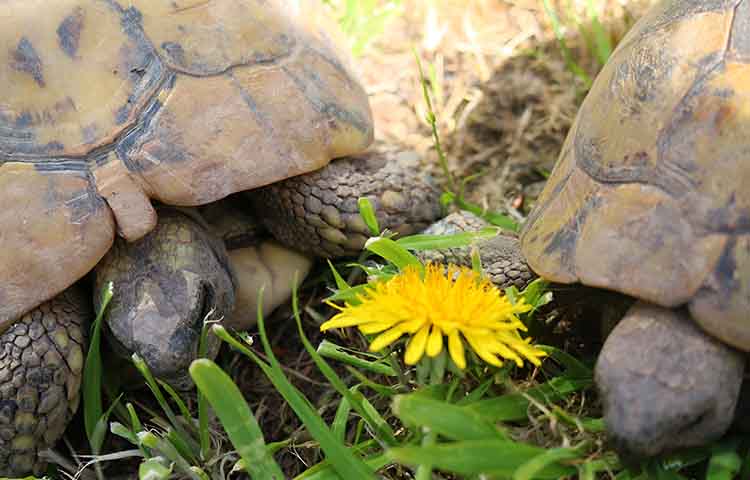
Dandelions are a useful food plant for many tortoises. You can grow your own by cutting an existing plant’s root into sections about 2.5cm (1in) long and placing each in a separate container, such as a yoghurt pot with drainage holes.
Keep the top of each root just above the soil, water well and cover the pots with a clear plastic bag. Leave them in a light position for about a week until shoots appear, then remove the bag and keep the soil moist until the leaves are ready to pick. Make sure the plants haven’t been exposed to pesticides or harmful chemicals before feeding them to your tortoise.
How much should I feed my tortoise?
In the wild, tortoises spend much of the day browsing for food. For indoor tortoises, provide fresh food in amounts and at intervals suited to their species, age and health. Offer a varied diet that reflects their natural foods and always provide clean drinking water.
Monitor your tortoise’s appetite, weight and growth. If it stops eating or you notice unexpected weight loss, seek veterinary advice. You can also read our advice on tortoise appetite, calcium and vitamin D3.
Disclaimer: Should you choose to follow any advice provided in this article, you do so at your own risk. The advice should not be used as a substitute for professional advice from your vet.