
Learning how to sex a lizard can feel tricky at first, especially for new keepers. Many lizards don’t show obvious differences between males and females, and signs can vary by species and age.
Below, we explore safe, commonly used methods, what to look out for, and when it’s best to ask a professional.
Probing and popping
Probing and popping are hands-on techniques sometimes used by professionals to find out a reptile’s sex.
Probing involves inserting a thin metal probe into the vent to check for hemipenes. In theory, the lizard is a male if the probe goes deeper. But doing this technique incorrectly can lead to:
- Internal injury
- Bleeding
- Infection
- Long-term damage
Popping applies pressure around the vent to force the hemipenes outward in young reptiles. When carried out by someone inexperienced, it can:
- Carry a high risk of tissue damage and pain
- Give false results, especially in young lizards
For most pet lizards, probing and popping aren’t needed – your lizard’s welfare and wellbeing comes first. Visual checks, watching their behaviour, or professional vet methods such as imaging are far safer and more reliable.
How to tell the sex of a lizard
The most important thing to know about finding out the gender of a lizard is that methods differ between species.
Unlike mammals, lizards don’t have external genitalia that are easy to see. Instead, keepers look for physical traits and behaviours that tend to differ between males and females.
Femoral pores
These are small pores along the inside of the thighs. In many species, males have larger, more pronounced pores that may secrete a waxy substance.
Hemipenal bulges
Male lizards have a pair of reproductive organs called hemipenes (penises). These sit inside the tail base and can appear as two bulges behind the vent.
Body size and shape
Males may have broader heads, thicker necks, or bulkier builds, although this isn’t consistent across all species.
Colour
In some species, males develop brighter colours, especially during breeding season.
Behaviour
Behaviour alone isn’t reliable, though the following behaviours can suggest the lizard is a male:
- Head bobbing
- Dominance displays
- Increased territorial behaviour
Age
Age plays a big role – younger lizards are often very difficult to sex accurately. For many species, keepers may need to wait several months or even years before clear differences appear.
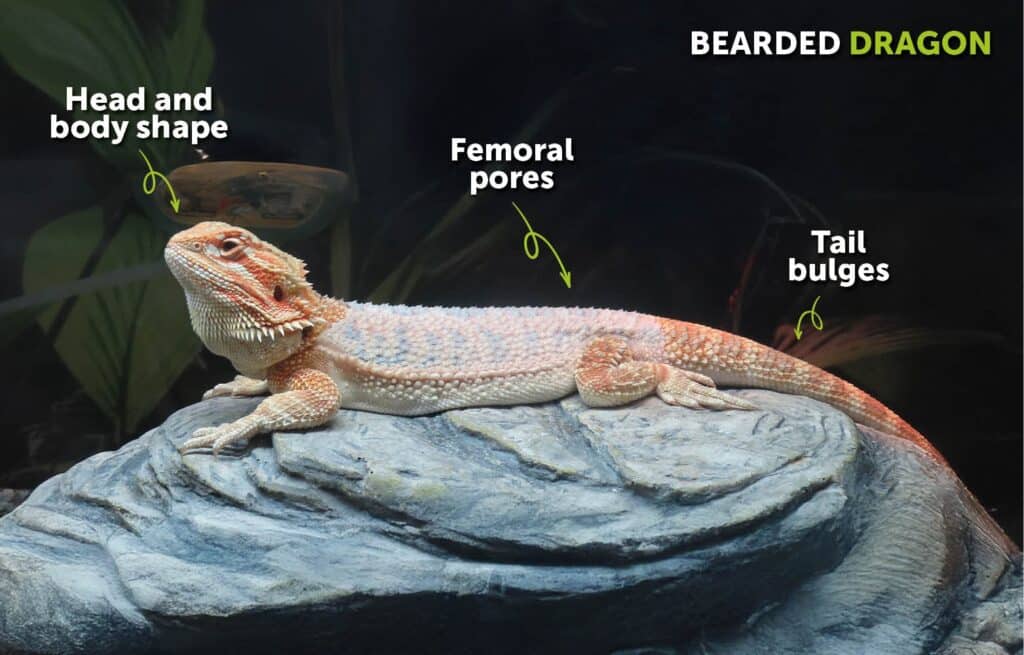
How to tell the gender of a bearded lizard
Bearded dragons are relatively easier to sex compared to many other lizard species, particularly once they’re older than eight to 12 weeks.
Key signs to look for include:
- Tail base bulges – when gently lifting the tail and shining a torch from above, males usually show two elongated bulges on either side of the tail base. Females typically have one central bulge or a flatter appearance.
- Femoral pores – male bearded dragons tend to have larger, darker, and more obvious pores along their thighs.
- Head and body shape – males often have broader heads and thicker necks, though this can vary.
- Behaviour – males may display frequent head bobbing, arm waving from females, or territorial behaviour during maturity.
- Colour changes – adult males sometimes develop darker beards, particularly when stressed or during breeding displays. But females can also darken their beards, so this shouldn’t be used alone.
Very young bearded dragons may appear similar regardless of sex. This is why many breeders wait until they’re more developed before confirming gender.
How to sex a blue tongue lizard
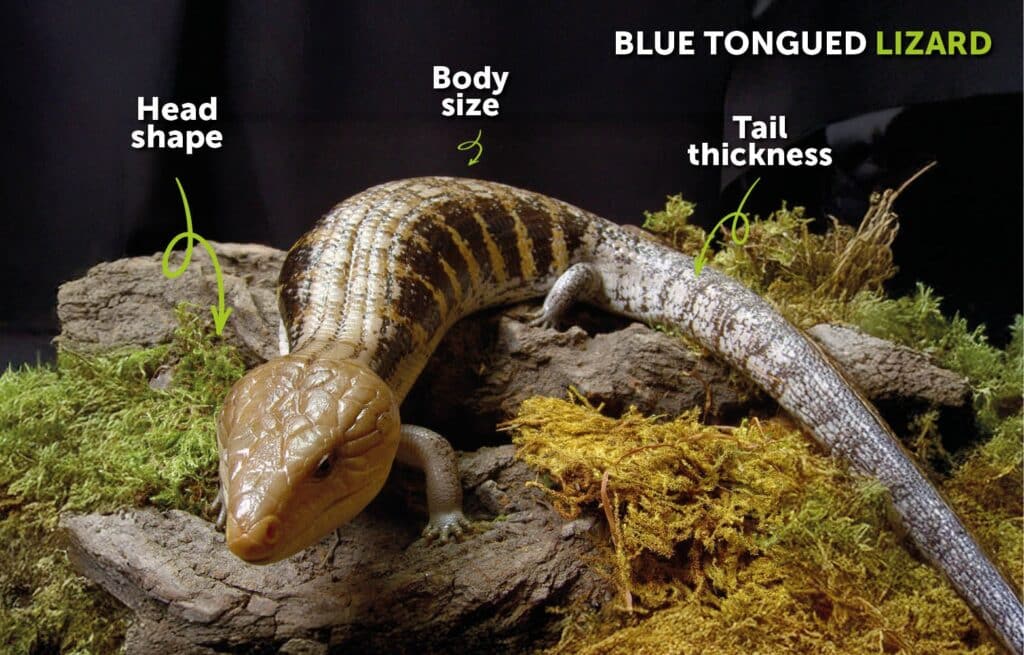
Understanding how to sex a blue tongue lizard can be more challenging, even for experienced keepers.
Things that may help include:
- Head shape – males often have wider, more triangular heads, while females may have narrower, more streamlined profiles.
- Body size – females are sometimes longer-bodied, while males may appear stockier, though this isn’t a firm rule.
- Tail thickness – the tail base in males can appear thicker due to hemipenes, but this difference is often very subtle.
- Behavioural clues – during breeding season, males may show increased interest in other lizards or mild dominance behaviours.
Because of these sexing challenges, many owners rely on veterinary methods such as ultrasound or endoscopy if accurate sexing is important – for example, when planning breeding or housing arrangements.
How to sex a savannah monitor lizard
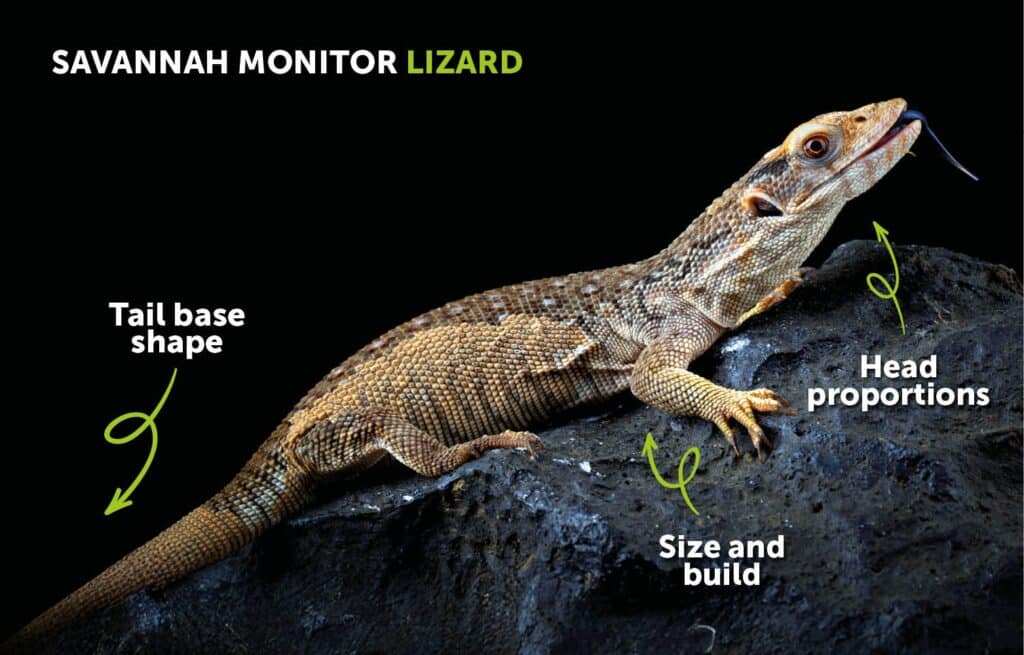
A savannah monitor lizard is particularly difficult to sex visually and safe handling is essential.
Potential signs of what their gender may be include:
- Size and build – males are often larger and heavier than females, though diet and environment can affect growth.
- Tail base shape – as with other lizards, males may show subtle hemipenal bulges, but these are not always easy to see.
- Head proportions – adult males sometimes have broader heads and thicker necks.
- Behaviour – mature males can become more territorial, especially around breeding season, but behaviour varies widely between individuals.
Because savannah monitors can become stressed by excessive handling, professional sexing by a reptile vet is often recommended. This may involve imaging to reduce the risk of injury.
Can lizards change sex?
Most lizard species can’t change sex – this is usually determined before birth or hatching, either genetically or by incubation temperature.
That said, there are a few reptile species worldwide that can show unusual reproductive traits. But these are rare and not typical for commonly kept UK pet lizards.
Sometimes, a lizard’s behaviour or appearance changes with age, which can make it seem as though their sex has changed. In reality, their gender characteristics become more noticeable over time.
Invest in lizard insurance today
As a responsible lizard owner, you want to look after your lizard’s wellbeing and be able to offer them the best treatment possible if they fall ill.
Exotic Direct is the UK’s only exotic pet insurance provider. We’re proud to have many years of experience supporting lizard owners with their cover needs. It’s quick and easy to set up a policy, so why wait?
FAQs
Is it necessary to know my lizard’s sex?
No, it’s not always necessary to sex your lizard. Many pet lizards live perfectly healthy lives without their sex being confirmed, unless breeding or specific housing decisions are involved.
Can a vet always tell the sex of a lizard?
In most cases, yes a vet can tell the sex of a lizard. Reptile vets have access to safe diagnostic tools that improve accuracy.
Is sexing stressful for lizards?
Sexing can be stressful for a lizard if done incorrectly. Gentle handling and professional advice help minimise stress.
Do male lizards kill themselves after sex?
No, male lizards don’t die after mating, but breeding season can be physically demanding and males may:
- Eat less
- Lose weight
- Appear more stressed during this period
With proper care, nutrition, and a suitable environment, they usually recover without long-term issues.