
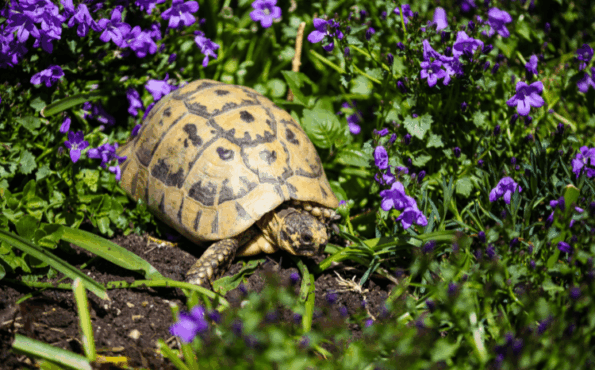
All you need to know about getting your tortoise outdoors and how to do it safely.
For tortoise owners, the arrival of spring and summer brings an exciting transition. Getting your shelled companion out into the garden is one of the best things you can do for their health. The natural UV rays of the sun are completely irreplaceable when it comes to their general growth, shell development, and metabolic wellbeing.
We know that setting up an outdoor space for a “special” pet requires a bit of careful planning. To help you create a safe, stimulating, and escape-proof summer haven, we’ve updated our definitive guide to outdoor tortoise care with the latest welfare and security standards.
When can tortoises go outside?
All tortoise species benefit from spending time in the open air during the warmer UK months. Exposure to natural sunlight helps them produce Vitamin D3, which is vital for absorbing calcium and maintaining a strong, healthy shell.
- Hatchlings and Juveniles: Even very young tortoises should get outside, provided they are in a highly secure, predator-proof run.
- Dietary Support: Even if your tortoise is soaking up the sun, you should still continue to supplement their varied diet with additional Calcium and Vitamin D3 powders. Eating garden weeds is fantastic, but it doesn’t entirely cover all their specialised nutritional needs.
For brilliant tips on growing your own food and sourcing budget-friendly nutrition, check out our quick and easy ways to save money as a tortoise owner.
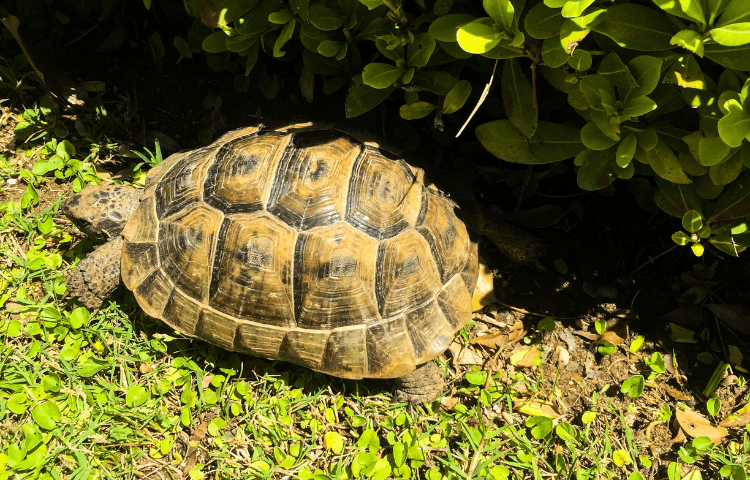
What temperature is safe for an outdoor visit?
The ideal temperature range for common Testudo species (like Mediterranean Spur-thighed or Hermann’s tortoises) sits between 26°C and 30°C.
Because UK weather is notoriously unpredictable, you don’t necessarily have to wait for a 30°C heatwave, but conditions must be warm, dry, and sunny. Never leave your tortoise outside in damp, windy, or overcast conditions, and always bring them indoors well before sundown.
Is your tortoise too hot?
While tortoises love to bask, they cannot regulate their own body temperature internally. If they overheat, it can be fatal. Providing accessible shade is just as important as providing a basking spot.
- Natural Greenery: Plant large, established shrubs to create natural canopies. Mediterranean tortoises will love sheltering under Rosemary and Lavender, while larger desert species like Sulcatas (African Spurred) appreciate sturdy Pampas grass. Any non-toxic plant will work beautifully.
- The Cool Down Burrow: In the wild, tortoises dig into the earth to escape the midday heat. Create a dedicated digging area in your garden by loosening a patch of soil so they can easily bury themselves.
- Reflective Hides: Place a wooden hide or shelter in a shady corner. Painting the roof white is a brilliant trick to help reflect the sun’s harsh rays.
- Hydration and Baths: Always provide a shallow, heavy dish of fresh water refreshed daily. During particularly hot spells, bathe your tortoise in lukewarm water several times a week to keep them fully hydrated.
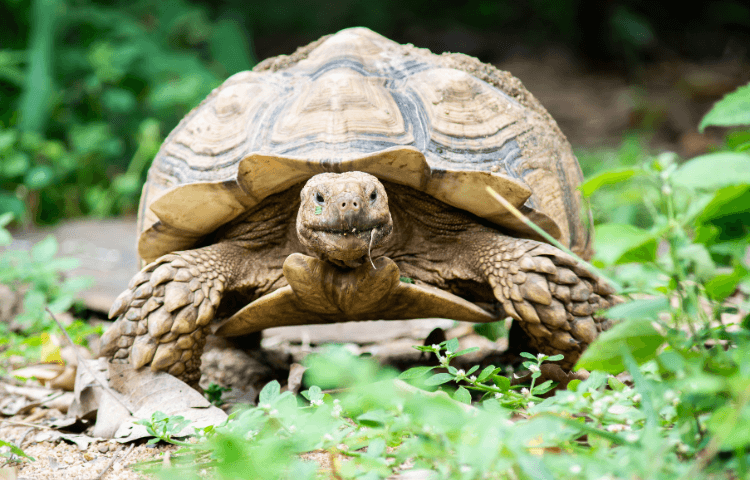
Building a secure outdoor enclosure
Allowing a tortoise completely free, unsupervised range of a standard garden is risky. They are surprisingly strong bulldozers, expert climbers, and determined diggers. A dedicated outdoor enclosure or secure “run” is the safest option.
- Substantial Boundaries: For adult tortoises, use sturdy, solid boundaries like double-stacked wooden railway sleepers. If a tortoise can see through or over a boundary, they will spend all day trying to climb or smash through it.
- Buried Foundations: Ensure the perimeter walls of the enclosure extend at least 15–30 cm into the ground to prevent your tortoise from digging their way out underneath.
- Overhead Protection: For hatchlings and smaller species, a secure wire-mesh lid is mandatory. This keeps your pet safely inside while protecting them from local predators like foxes, birds of prey, and curious domestic dogs.
How do I prevent theft and loss?
Because many tortoise species are highly valuable and covered by strict conservation listings, they are unfortunately targets for theft. Furthermore, their small size and quiet nature mean they can easily go missing if they manage to slip past a boundary.
Deterring Intruders
- Position your tortoise enclosure close to the house where it is easily visible from your windows. Treat their outdoor time with the same level of supervision you would give a young child.
- Install Passive Infrared (PIR) sensors, movement detectors, or smart security cameras around the perimeter of the enclosure to alert you to any unusual activity.
- Secure shed doors and overnight enclosures with heavy-duty padlocks and tamper-proof hasps.
The Identification System
Never use paint, nail varnish, or chemical marker pens on your tortoise’s shell to identify them; these can be toxic, they erode over time, and they offer a false sense of security.
Instead, take high-quality, dated photographs of your tortoise from the front, back, sides, and—most importantly—the plastron (the underside of the shell). The patterns of pigment, growth lines, and striations on the plastron are entirely unique to each animal, acting exactly like a human fingerprint if your pet ever needs to be formally identified.
CITES Regulations and Microchipping
Many common garden tortoises are protected under the Convention on International Trade in Endangered Species (CITES). Popular UK species like the Hermann’s, Spur-thighed, and Marginated tortoises are listed under Appendix 2, while species like the Indian Star are under Appendix 1.
If you ever intend to breed your tortoises or sell their hatchlings, you must possess an Article 10 CITES certificate issued by DEFRA.
- To qualify for a permanent certificate, parent tortoises must be microchipped.
- Hatchlings must be microchipped as soon as their shell (carapace) reaches a straight length of 10 cm.
- Always have microchips implanted by a specialist exotic or chelonian vet to ensure it is done safely.
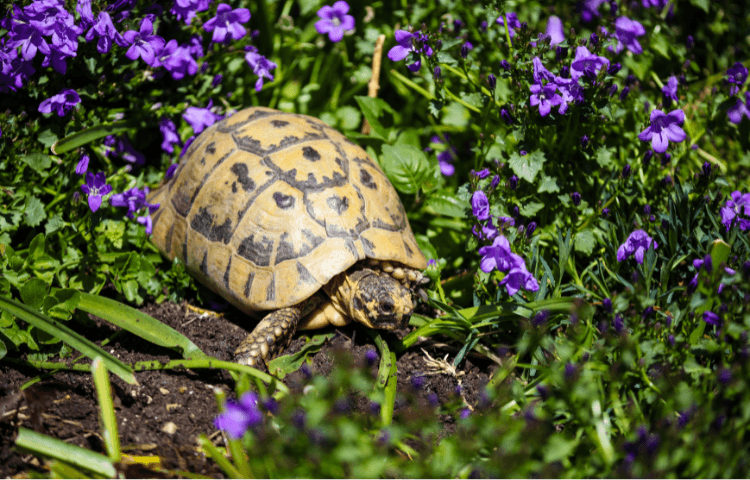
Protecting your shell-shocked budget
Even with the most pristine garden setup, tortoises can occasionally run into trouble. From unexpected respiratory infections caused by a sudden UK downpour to accidental injuries, specialist vet bills can quickly mount up.
We’ve been supporting the exotic pet community with compassionate care since 1996. We offer dedicated tortoise insurance policies providing up to £2,500 of vet fee cover, alongside protection for death and theft.
Having a policy in place means that if your companion ever seems under the weather, you can head straight to an exotic vet immediately, knowing you only have to focus on their recovery, not the paperwork.